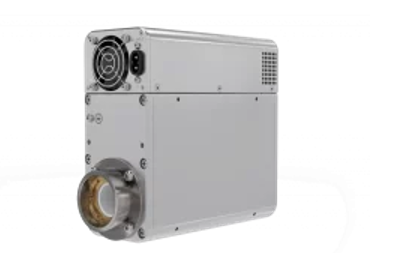
Walk through any modern airport, dental clinic, or food plant, and you’ll notice a pattern: the X-ray equipment keeps getting smaller, lighter, and faster, while the images keep getting sharper. That progress doesn’t come only from better detectors or smarter software. It begins deep inside the system, where high voltage X ray generators convert ordinary power into the tens or hundreds of kilovolts that drive the tube.
As OEMs push for compact scanners, portable inspection tools, and robotic imaging arms, the pressure falls on one metric above all: power density, meaning how much usable power fits into how little space and weight. Here are the trends reshaping it.
What Power Density Means in X-Ray Systems
Power density is simply output power divided by volume or weight. In imaging equipment, higher density lets engineers shrink the generator, free up room for other components, reduce the load on a robot arm or gantry, and make portable systems practical. But density isn’t a free lunch. Packing more power into less space increases heat, electrical stress, and noise. Every trend below is, in one way or another, a strategy for raising density without sacrificing stability, safety or lifetime.
Wide-Bandgap Semiconductors Change the Equation
One of the biggest shifts comes from silicon carbide (SiC) and gallium nitride (GaN) switching devices. Compared with traditional silicon, these wide-bandgap materials can switch faster, tolerate higher voltages and temperatures, and waste less energy as heat. Why does this matter? Lower switching losses mean less heat to remove, so cooling hardware can shrink. Faster switching also allows higher operating frequencies, which feeds directly into the next trend.
Higher Frequencies, Smaller Magnetics
Transformers and inductors are often the bulkiest parts of a power converter, and their size depends heavily on operating frequency. As frequency rises, the magnetic cores can shrink considerably for the same power. Designers are therefore moving to higher-frequency resonant topologies with soft switching, where devices turn on and off when voltage or current is near zero. Planar magnetics, which use flat windings and thin cores, also help by reducing height and improving thermal paths. The result is a leaner power stage that still delivers clean, stable output.
Integration Shrinks the Whole System
Raising density at the component level is only half the story. Integration multiplies the benefit. Combining the power supply, X-ray tube, and control electronics into a single unit eliminates separate housings, reduces cabling, and shortens the high-voltage path. This is where the line between generator and source begins to blur.
Compared with conventional high voltage X ray generators, which are paired with a separate tube through high-voltage cables, integrated designs give OEMs a ready-to-mount module with a smaller footprint, simpler installation, and predictable thermal behavior. Selecting between the two approaches depends on power level, space, cooling, and serviceability.
See also: Everything You Should Know About Zenbusiness Review Moneyaisle Today
Thermal Management Becomes a Design Driver
As density rises, heat becomes the main limiting factor. A tiny generator that runs hot will drift, age quickly, or shut down. Thermal design therefore gets more attention than ever:
- Better materials: thermally conductive potting compounds, heat spreaders and high-conductivity substrates.
- Smarter layouts: placing hot components where airflow or cold plates can reach them.
- Integrated cooling: fans, heat exchangers or liquid cooling built into the housing.
- Thermal monitoring: sensors and control logic that adjust operation before temperatures become critical.
Efficiency is the quiet hero. Every percentage point of efficiency gained reduces heat that must be removed, which compounds the density benefit.
Insulation and High-Voltage Limits
Voltage itself sets physical limits. High voltage requires insulation spacing to prevent arcing, corona, and partial discharge, and those distances don’t shrink just because transistors do. Engineers respond with more compact insulation strategies, such as solid encapsulation, tailored oil or gas insulation, and carefully shaped electrodes that smooth electric fields. Voltage multiplier stages are designed to distribute stress evenly. Quality of materials, manufacturing cleanliness, and testing all matter, because small defects can become failure points in a tightly packed design.
Digital Control and Monitoring
Smaller generators have less margin for error, so control has become smarter. Digital controllers now regulate kV and mA with fast feedback, compensate for temperature and input variation, and handle arc events gracefully. They also collect diagnostic data such as temperatures, run time, and fault history, supporting predictive maintenance and easier integration with host systems. This matters for new imaging methods too. Fast kV switching for dual-energy imaging, rapid scans that reduce patient exposure, and stable output for quantitative analysis all depend on precise, responsive control.
The Trade-Offs OEMs Should Weigh
Higher density brings real benefits, but it also introduces compromises:
- Heat versus size: the smaller the unit, the more critical cooling becomes.
- EMI: faster switching can create more electrical noise, requiring careful shielding and filtering.
- Serviceability: highly integrated units may be harder to repair in the field.
- Cost and qualification: advanced materials and testing add expense and development time.
- Reliability: derating, burn-in, and lifetime testing must keep pace with density.
The best designs treat density as one factor in a broader balance of performance, reliability, and cost.
What to Ask a Supplier
When evaluating power options for a new imaging platform, ask about:
- Power and voltage ratings relative to size and weight.
- Efficiency and thermal limits at continuous duty.
- Output stability, ripple, and arc handling.
- Cooling requirements and options.
- Integration level and available customization.
- Qualification testing, lifetime data and support.
Conclusion
Power density is a quiet force behind lighter, faster and more capable imaging equipment. Wide-bandgap devices, higher switching frequencies, planar magnetics, integrated architectures and smarter thermal and digital control all contribute to smaller, more efficient systems. Each advance also raises the bar for insulation, cooling and reliability. For OEMs planning next-generation platforms, High Voltage Power Supplies should be evaluated early and treated as a core design decision, not an afterthought.
VJ X-Ray is a global developer and manufacturer of integrated X-ray sources and high-voltage generators for OEMs, with facilities in New York and Suzhou. They draw on over three decades of high-voltage engineering experience to deliver compact, customizable products that balance power, efficiency, and reliability for next-generation imaging systems.